
Are you over 65 and Exercising? What Nearly 400 Seniors Say Keeps Them Moving & Staying Independent

Nearly 400 people responded to a simple question I asked on @Threads:

“For those over 65 — how often do you exercise, at what intensity, and what benefits do you get from your routine?”

The answers were remarkably consistent, and they reveal something powerful: after 65, exercise isn’t just about fitness — it’s about staying independent.

What People Reported: The Benefits Are Hard to Ignore

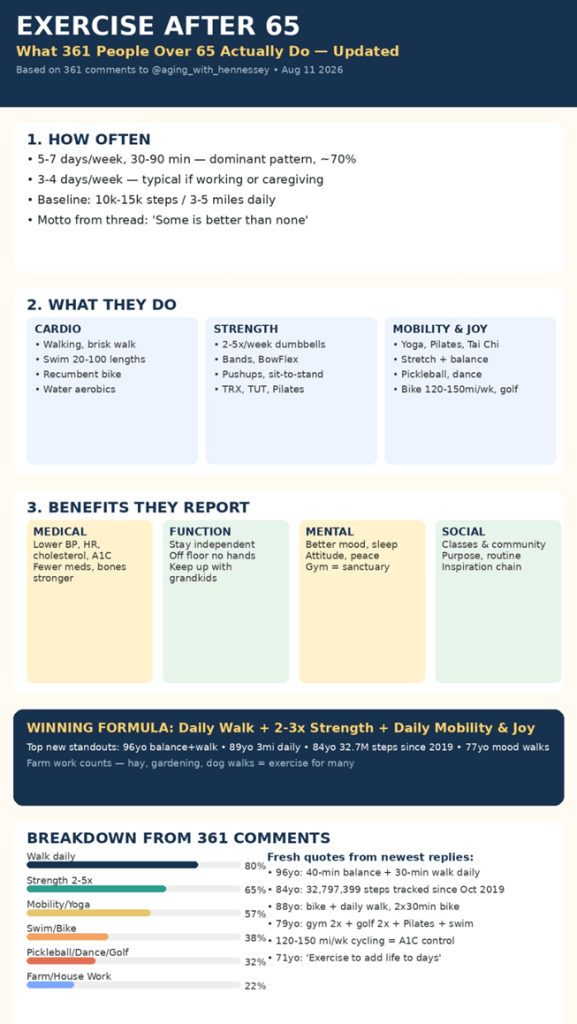
Across hundreds of comments, older adults described improvements that touch every part of life:

  • Medical: lower blood pressure and resting heart rate, better cholesterol, reduced medications, stronger bones and balance.
  • Functional: staying independent, getting off the floor without using hands, keeping up with grandkids, delaying assisted living.
  • Mental: clearer thinking, better sleep, improved mood, a sense of routine and purpose.
  • Social: community at the gym, accountability, and the simple joy of being around others.

These aren’t abstract claims — they’re lived experiences from people who’ve made movement a daily part of their lives.

When you look at the chart of responses, the routines fall into a simple, repeatable formula:

A Clear Pattern Emerged

Walk + Strength + Balance/Flexibility = Independence

Here’s how it shows up:

  • Walking is the base. Many reported 3–6 miles or 8,000–15,000 steps daily.
  • Strength training 2–4 days a week — dumbbells, bands, machines, bodyweight.
  • Balance and flexibility work — yoga, Pilates, water aerobics, stretching.

Some responders are still active at 96, 89, and 84, proving that movement is possible — and beneficial — at any age.

And for many, “exercise” isn’t limited to the gym. Farm work, gardening, dog walking, dancing in the kitchen — all count. The common thread is simple: they move. Every day.

The Most Common Answer Wasn’t a Specific Exercise

It was a goal:

Stay independent.

People want to keep living life on their own terms — to move freely, stay strong, stay sharp, and stay connected.

And the routines they shared show that there isn’t just one way to get there. There’s your way.

Even after 65, there is always something you can do. Walking, strength work, balance training, or simply daily mobility — it all adds up.

The Bottom Line

Movement is medicine. Movement is independence. Movement is a brighter outlook on life.

So what’s stopping you?

Follow @aging_with_hennessey on Threads for more insights on healthy aging.
Aging Better in Practice

Small Shifts, Big Impact on Healthspan

“After reflecting on the gap between lifespan and healthspan, I started asking: What can I actually do to close it?

It’s a question that hits home for many of us. We want to enjoy life fully, right up to the end—not just survive, but thrive. We want to stay independent, avoid being a burden to our loved ones, and make the most of every chapter. So what does it take to do that?

While genetics play a role, research suggests that up to 70–80% of our aging outcomes are shaped by lifestyle choices. That’s empowering. It means we have agency. And it means small, consistent shifts can lead to big changes in how we age.

 My Top Three Healthspan Boosters

These are the habits I believe have the greatest impact—and they’re backed by science.

This one’s obvious, but worth repeating. Quitting smoking is one of the most powerful steps you can take to extend your life and reduce the risk of chronic disease. The benefits begin almost immediately and compound over time.

Eat for Longevity

A diet rich in whole grains, fruits, vegetables, nuts, and legumes—and low in processed foods and red or processed meats—can dramatically reduce the risk of heart disease, diabetes, and cancer. Studies show that switching to a longevity-focused diet even in midlife can add up to 10 years to your life expectancy.

Regular physical activity—whether it’s brisk walking, cycling, swimming, or running—can slash your risk of premature death and chronic illness. According to the American Medical Association, meeting recommended activity levels can reduce cardiovascular mortality by 22% to 31%.

Beyond the Big Three: Supporting Habits That Matter

These additional lifestyle factors can amplify the benefits of the core three—and help you age with strength, clarity, and joy.

Prioritize Sleep

Sleep affects everything: physical health, cognitive function, emotional resilience. While the ideal amount varies, most experts suggest 7–9 hours per night. As my yoga instructor says: you do you. Just know that chronic sleep deprivation is linked to obesity, diabetes, heart disease, and shortened lifespan.

 Manage Stress

Chronic stress accelerates aging and contributes to disease. Mindfulness, meditation, journaling, and time in nature can help regulate stress hormones and boost emotional well-being. These aren’t just feel-good practices—they’re longevity tools.

Stay Connected

Strong social relationships and community involvement are linked to greater mental resilience and longer life. Research from Decode Age suggests that robust social networks can increase longevity by up to 50%. That’s not just heartwarming—it’s life-extending.


Limit Alcohol & Prioritize Oral Health

Excessive drinking can undermine all the other good habits. Cutting back—or cutting it out entirely—can have a profound effect on your long-term health.

And while we’re talking about often-overlooked habits, here’s one that deserves more attention: see a dentist at least twice a year. According to the Harvard School of Dental Medicine, good dental health not only protects against gum disease, inflammation, and tooth loss, but also helps guard against many age-related diseases. A healthy mouth really can lead to a healthier body.

 Final Thoughts

Aging better isn’t about chasing perfection. It’s about making intentional choices—day by day, year by year—that support your health, vitality, and independence. The earlier you start, the greater the benefits. But it’s never too late to begin.